
Storm Debris and Displaced Property Recovery
Ground Zero Disaster Response for vehicles, boats, and debris lodged in waterways, canals, trees, or structures after major storms
Ground Zero Disaster Response provides post-storm recovery work that removes vehicles, boats, appliances, and building materials from locations where floodwater or wind has deposited them. You may be dealing with a boat wrapped around a tree, a vehicle submerged in a retention pond, or a shed roof lodged in a canal. This service is for homeowners, property managers, and municipal crews who need debris cleared and property returned to a manageable state after a hurricane, tropical storm, or severe flooding event.
The work begins with surveying the site to locate displaced objects, assess their condition, and plan safe extraction routes. The crew uses winches, chainsaws, rigging systems, and boats to access debris in swamps, bogs, and overgrown waterways where standard equipment cannot operate. Storm recovery often involves navigating flooded wooded areas and soft riverbanks where water levels remain unpredictable for days after the event.
If your property has debris or displaced items in areas you cannot clear yourself, contact Ground Zero Disaster Response to schedule an initial walkthrough and discuss the scope of the recovery work.
CAGE Code: 9UTQ2
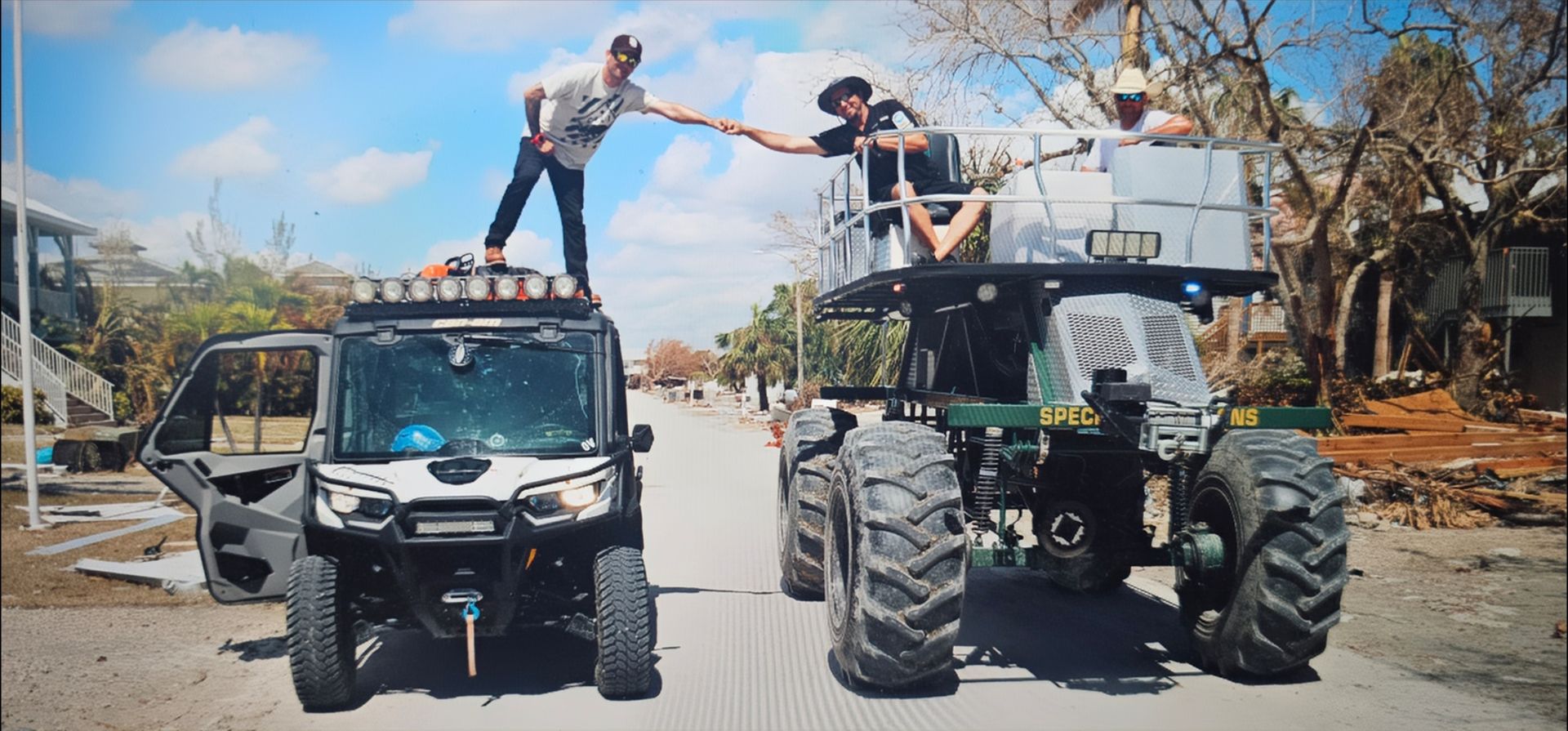
Ground Zero Disaster Response, provides search and rescue operations, rescue K-9 deployment, emergency supply distribution, natural disaster UTV transportation, and high-water rescue vehicles to affected areas when traditional infrastructure fails. This service operates across the United States. Response teams also deploy to Puerto Rico, the Bahamas, Dominican Republic, Mexico, when large-scale disasters require additional ground support. If your community or organization needs disaster response coordination or you want to support relief efforts, reach out to learn how Ground Zero Disaster Response mobilizes during emergencies. Response and recovery operations begin as soon as it is safe to enter affected areas, with teams using UTVs, rescue vehicles, and K-9 units to navigate flooded roads, debris fields, and inaccessible neighborhoods. In areas across our fifty states responders conduct door-to-door searches, deliver water and medical supplies, and transport people who cannot evacuate on their own to safer locations or medical facilities.
After deployment, you will see communities with restored access to emergency supplies, individuals rescued from flooded or collapsed structures, and coordinated relief efforts that connect local needs with available resources. Rescue K-9s locate people trapped under debris, and emergency vehicles provide transportation when roads are impassable by standard vehicles.
This service does not replace government emergency management or long-term rebuilding efforts, but it fills critical gaps in the immediate aftermath when response times are measured in hours and access is limited. The focus is on life safety, urgent needs, and connecting affected communities with the resources they need to survive the first days after disaster strikes.
How Disaster Recovery Work Is Completed
You provide access to the affected area, and the crew documents what needs to be removed, where it is located, and whether it poses a hazard to surrounding structures or waterways. Large items such as boats or vehicles are rigged with straps and pulled to dry ground using truck-mounted winches or portable anchor systems.
Once an object is freed and moved, you will see the area cleared of cables, broken limbs, and surface debris that accumulated during the storm. Ground Zero Disaster Response does not provide dumpster rental or final disposal, but the crew will consolidate recovered items in a location you designate for pickup or further sorting. The site is left accessible for follow-up work such as grading, drainage repair, or replanting.
Recovery is scheduled based on site conditions and crew availability, which can be limited during the first two weeks after a major storm when demand is high. The crew does not enter flooded areas with standing electrical hazards or active current flow. If a boat or vehicle is lodged in a tree or beneath a collapsed structure, the crew will cut or dismantle obstructions as needed to create clearance.
Common Questions About Post-Storm Recovery
Homeowners and property managers often ask how quickly work can begin, what types of debris can be removed, and how recovery differs from standard demolition or cleanup.
What types of debris are removed during disaster recovery?
Boats, vehicles, trailers, appliances, roofing materials, fencing, and large tree sections that have been displaced by floodwater or wind are all removed, provided they are not entangled with electrical lines or actively hazardous materials.
How does the crew access items in swamps or flooded wooded areas?
The team uses flat-bottomed boats, waders, and portable winch systems anchored to stable trees or vehicles, along with chainsaws to clear obstructions blocking the retrieval path.
When can recovery work begin after a storm?
Work typically begins within three to five days after the storm passes, once standing water has receded enough to assess hazards and once roads are passable for equipment trucks.
Why is storm debris often found in unexpected locations?
Floodwater lifts objects and carries them downstream or into adjacent properties, and wind throws debris into trees or onto rooftops, where it becomes lodged and requires rigging to remove safely.
What is not included in disaster recovery service?
The service covers extraction and site clearing, but does not include hauling debris to a landfill, filing insurance claims, or repairing damage to structures or landscaping caused by the debris.
Ground Zero Disaster Response responds to storm recovery requests throughout surrounding waterways, and the crew is equipped to work in flooded and overgrown conditions where visibility and footing are compromised. If your property has debris that cannot be moved with standard equipment, reach out to discuss scheduling and site access.